
Long-form Market Insight OEM Development Guide
How OEM Buyers Should Compare Body Trimmer Samples Before Approval
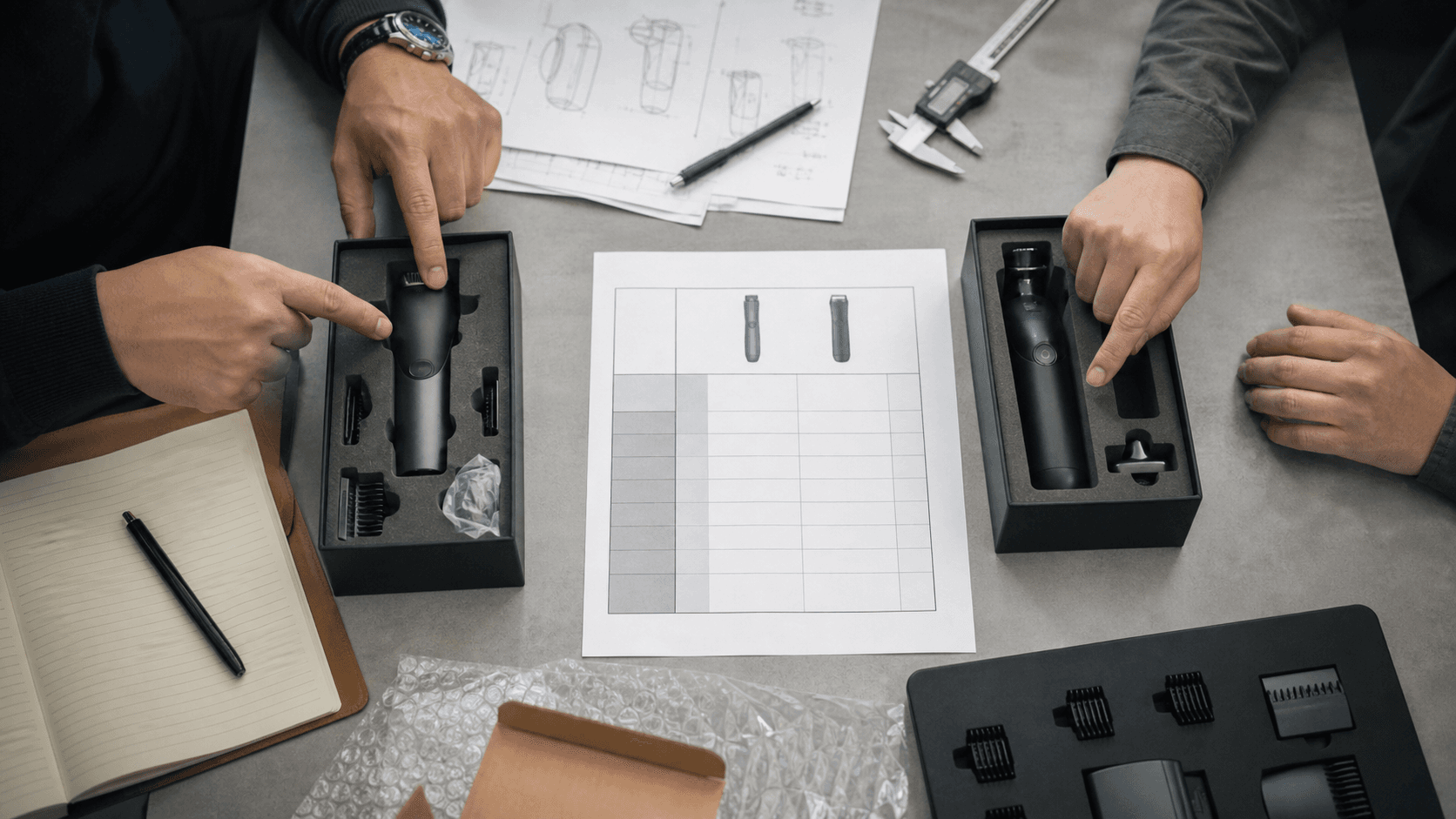
For OEM buyers, compare body trimmer samples as a product planning task, not a feature-only review. The right sample check connects product positioning, accessory set, packaging, RFQ scope, and sample evaluation so commercial teams can approve the same version with fewer instruction and complaint-control gaps.
Planning an OEM project? Submit RFQ
What consumer problem should OEM buyers define before comparing body trimmer samples?
The buyer should first define the channel problem the product must solve. In practice, that means clarifying whether the SKU needs to feel easy to understand on shelf, simple to explain in a marketplace listing, or complete enough for a private label launch with limited support materials. That decision is more useful than starting with blade shape or color alone, because it tells the team what the sample must prove.
For an OEM project, the consumer moment is not a grooming lesson. It is the point where a shopper decides whether the box, device, and accessories seem coherent. If the channel is sensitive to returns or repeated questions, the sample review should pay special attention to how the package communicates use, cleaning, charging, and accessory purpose.
Market context and limits
Use market information to frame a decision, not to make one for the project
2026 Q1 U.S. e-commerce context. This is not a body-trimmer demand forecast or AIMEI customer data.
U.S. Census Bureau: Quarterly Retail E-Commerce Sales ↗Context for the need to support objective advertising claims before they are made. It is not market-specific legal advice.
FTC: Policy Statement Regarding Advertising Substantiation ↗Context for product presentation, labelling, warnings and safety information in EU-facing programmes.
European Commission: General Product Safety context ↗How should a buyer brief turn that problem into a reviewable sample plan?
A practical buyer brief separates fixed requirements from open questions. Fixed items usually include target market, channel, product tier, and any non-negotiable accessory set. Open items may include comb count, blade compatibility, display language, or storage presentation. This makes the sample process more disciplined because each version is being tested against a written decision, not a loose preference.
For sourcing managers, this is where SKU positioning becomes visible. A mass-market version may need simpler accessories and a cleaner pack hierarchy, while a premium private label version may need a more complete kit and more explicit user instruction planning. The brief should show which points are under review before the sample is released for approval.
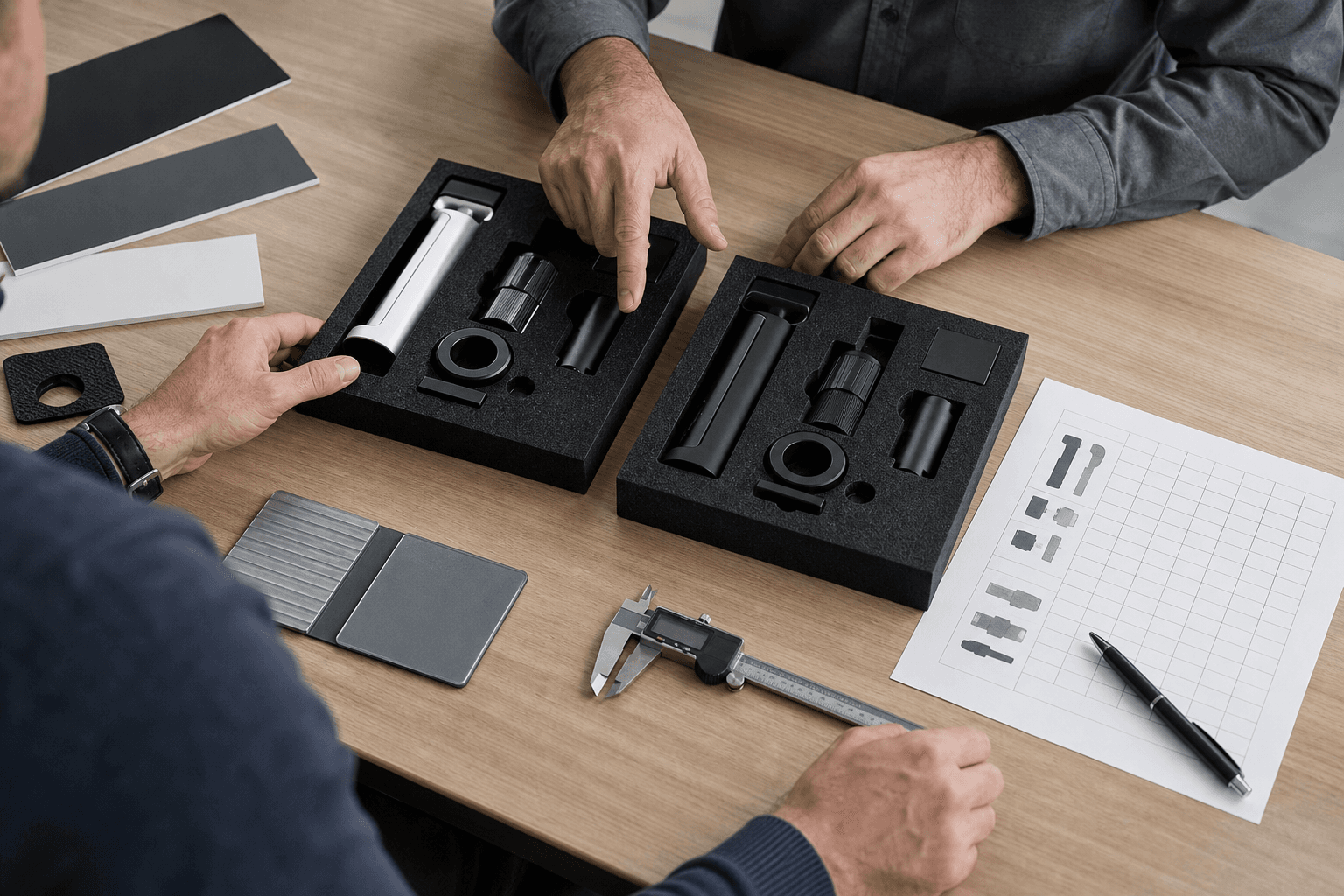
For the next decision in this project, read How OEM Buyers Evaluate a Body Trimmer Sample Before Mass Production.
What should be reviewed on the sample beyond the device itself?
The sample should be reviewed as one product system. That means the body trimmer, guide combs, charging method, cleaning access, storage method, and outer packaging should all be checked together. If one part of the system is unclear, the overall SKU may still look acceptable but create confusion in the market.
A named sample or version is most useful when the buyer can ask whether the physical build matches the intended story. If the device is positioned as an easy-to-list private label item, the buyer should check whether the accessory set supports that story and whether the pack layout makes the key points visible without overclaiming. This review is also the best time to confirm whether the sample supports the intended instruction flow for first-time users.
This decision changes what the team should check next, so continue with Body Trimmer Product Brief Template for OEM Buyers.
How should buyers handle packaging, manuals, and claims before artwork is released?
Packaging, manual, and claim language should be treated as one boundary, not three separate tasks. A device image, icon, benefit statement, and instruction step all create one expectation for the channel. If a statement depends on sample observation, testing confirmation, or final specification agreement, it should not move into finished artwork before the project file reflects that boundary.
This is especially important for importers and retail brand owners who need fewer after-sales complaints. The package should match the actual accessory set, and the manual should describe the exact version being supplied. Objective claims should remain tied to the correct sample and supporting record. That approach keeps the project easier to approve and easier to defend internally during listing or packaging review.
Once the product direction is clear, review the AIMEI Body Trimmer OEM Platform.
What should the RFQ capture after the sample comparison is complete?
The RFQ should capture the comparison result in project language, not in vague approval notes. It should identify the target market, channel, desired product positioning, accessory set direction, packaging scope, user instruction needs, and any open technical or documentation questions. This helps the supplier quote and develop against the same version the buyer reviewed.
The most useful next step is to name the version that is being carried forward and the items that still need confirmation. Buyers should ask which platform route is being considered, which components must change together, and which claims or pack details remain conditional. That makes the RFQ a control document, not just a request for numbers.
Buyer checklist before RFQ
- State the target market, channel, and product positioning before comparing samples.
- Mark each requirement as fixed, preferred, or still open before review.
- Check the device, accessories, packaging, and manual as one system.
- Tie any objective claim to the correct sample version and supporting project record.
- Put unresolved technical, documentation, and listing questions into the RFQ.
FAQ
Can this sample comparison framework replace a project-specific compliance review?
No. It is a planning framework for OEM and private label decisions. Packaging, claims, instructions, and market-facing details should still be checked against the confirmed project requirements and the relevant destination-market rules.
What should be included in the first RFQ for a body trimmer OEM project?
Include target market, channel, product positioning, intended SKU tier, accessory set scope, packaging direction, manual language needs, and any open claim or documentation questions. The cleaner the RFQ, the easier it is for the supplier to align sample revision and commercial discussion.
Can AIMEI review an existing platform and propose a suitable version?
Yes. AIMEI can discuss platform directions, guide comb planning, packaging presentation, and instruction layout against the buyer brief. Final feasibility and configuration should still be confirmed through sample evaluation and RFQ review.
Continue the OEM decision path
Ready to turn this requirement into a product brief? Submit RFQ